Our innovative disinfection technology offers superior kill rates, significant cost savings, reduced logistics, and improved safety for both industry and the developing world. Our products use common salt to make a potent chlorine-based solution within minutes for water treatment and surface sanitation.
For industrial applications, our disinfectant has been shown to eliminate biofilm that harbors disease-causing Legionella in cooling and piping systems. Product operating cost is many times less expensive than the hazardous biocides that are commonly used today. In addition, users often see up to 30% less chlorine demand, reducing cost even further and positively impacting other treatment processes.
Our systems can produce disinfectant in the most challenging settings, including remote healthcare facilities in developing nations where purchased chlorine is difficult to obtain. As confirmed by the world’s leading non-governmental organizations (NGOs) and Ministries of Health, our technology has proven to eliminate chlorine supply chain issues, allowing users to have a consistent supply of fresh disinfectant to improve health outcomes.
Products
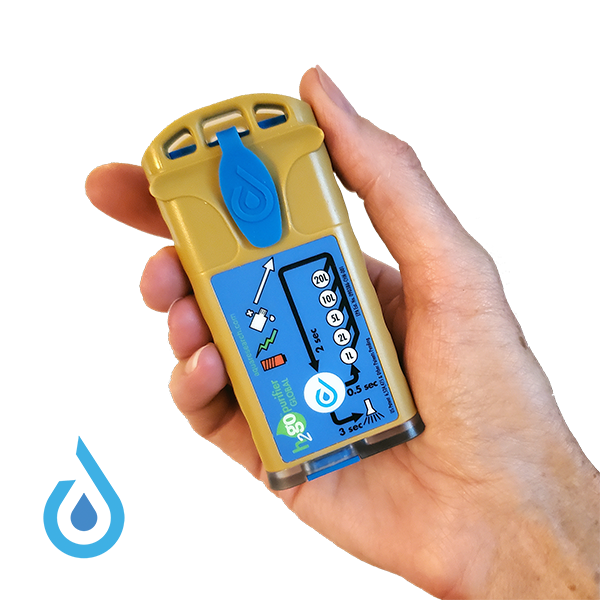
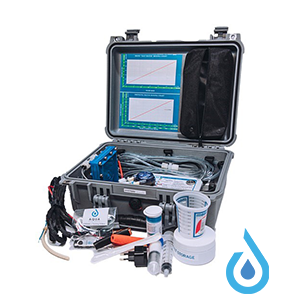
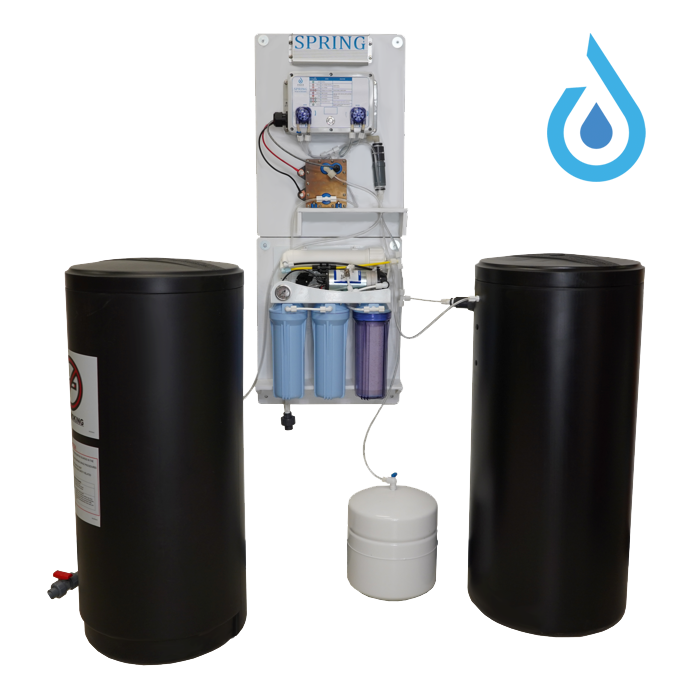
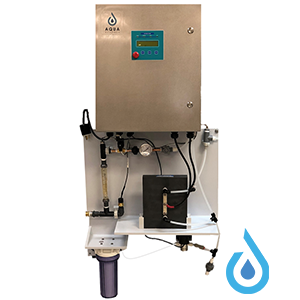
Sizes range from point-of-use devices for family, community, and healthcare treatment to industrial-scale systems for a wide variety of industrial applications.
 |
 |
 |
 |
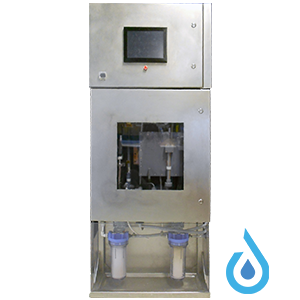 |
| H2gO® Purifier | STREAM® | SPRING® | LAKE®-AR | HARBOR-K |
Why Do We Need A Better Water Treatment Solution?
- We need more effective disinfection.
- Legionnaire’s disease in the U.S. has grown nine-fold since the year 2000. 1 in every 10 people who get sick with Legionnaire’s disease will die. Of those who acquire the infection in a health facility, 1 in 4 will die. Unlike mixed oxidants, conventional chlorine is ineffective against Legionella-harboring biofilms that form in cooling towers and distribution systems.1
- Every 1 in 7 medical patients in low and middle-income countries acquire an infection at the health facility, a rate 5 times that of the U.S. Tragically, 1 in 4 of these people will die. These high rates of hospital-acquired infections (HAIs) typically result from lack of access to chlorine. It is thought that more than half of HAIs can be prevented with high quality chlorine access and proper practices for water, sanitation, and hygiene (WaSH).2
- Over 2 billion people worldwide still do not have access to safe drinking water, contributing to 1.2 million annual deaths from waterborne disease.3
- We need more affordable disinfection.
- Mixed-oxidant generation is nearly the same cost as very affordable chlorine gas. In contrast, commercial bleach is about 3X more expensive, bromine is about 5X more expensive, and powdered chlorine is about 7X more expensive.
- Buyers in developing countries are often more vulnerable to exchange rate fluctuations that impact foreign supply of commercial chlorine.
- Build-up of biofilm in the system with conventional chlorine increases oxidant demand, while pH values, corrosion risk, and scaling associated with conventional chlorine often require additional chemicals. In contrast, mixed oxidants eliminate biofilm and algae, typically reducing oxidant demand and potentially reducing dosing requirements of other chemicals as well.
- We need safer disinfection.
- Mixed oxidants are generated at ~0.5% free available chlorine concentration, below OSHA’s hazard threshold and safe to touch.
- In contrast, the high concentrations (5% to 12.5%) of commercial sodium hypochlorite require special handling and OSHA compliance. The federal government imposes transportation limits of commercial sodium hypochlorite in private vehicles. The solution can burn the skin, corrode equipment, or off-gas.
- Calcium hypochlorite is highly corrosive and can spontaneously combust if in
contact with petroleum products. - Chlorine gas is extremely toxic, requiring Personal Protective Equipment, Risk Management Plans, and extreme care in handling.
- We need easier disinfection.
- Sodium hypochlorite requires frequent delivery logistics. Both the volume and the weight are at least three times higher than transporting salt for on-site generation. In addition, bleach has a shelf life and is subject to degradation, unlike salt.
- Hypochlorite drums are very heavy, often weighing in excess of 300 pounds, while bags of solar salt typically weigh only 40 pounds. Empty drums of bleach must be disposed of properly, while there are no disposal issues with empty bags of salt.
- Chlorine chemistry does not tend to positively impact other system processes, unlike mixed oxidants (chlorine + peroxide). The superior efficacy of mixed oxidants often leads to elimination of biofilm, which leads to reduced chlorine dosing, which can result in reduced TDS build-up and improved thermal transfer. Mixed oxidants also rapidly oxidize ammonia, iron, manganese, and arsenic.
References
1 “Legionella (Legionnaire’s Disease and Pontiac Fever).” Centers for Disease Control and Prevention, www.cdc.gov/legionella/about/diagnosis.html and www.cdc.gov/legionella/about/history.html.
2 “Progress on WASH in Health Care Facilities 2000-2021: special focus on WASH and infection prevention and control (IPC).” WHO/UNICEF Joint Monitoring Programme for Water Supply, Sanitation, and Hygiene, Aug. 2022, jmp-2022-wash-hcf-launch-optimized.pdf (who.int).
“Healthcare-Associated Infections (HAIs).” Centers for Disease Control and Prevention, www.cdc.gov/hai/data/index.html. Accessed 30 Nov. 2022.
3 Ritchie, Hannah and Max Roser. “Clean Water.” Our World in Data, Jun. 2021, https://ourworldindata.org/water-access.